Low-Down-Payment Used Cars in Hickory: The Payment You Get vs the Payment You Want
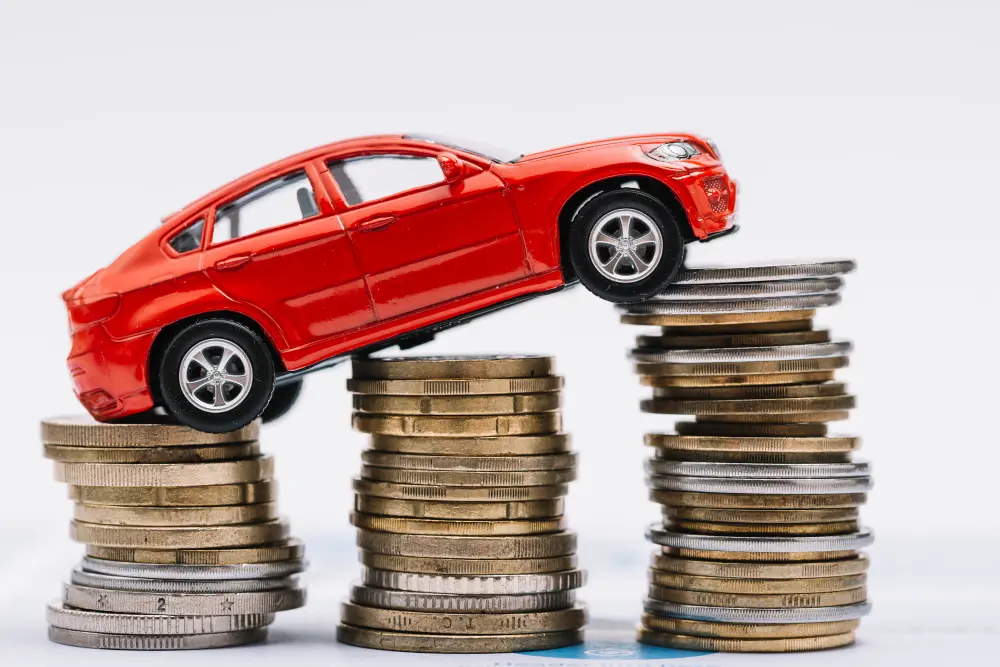
The sign is easy to like. Zero down. Or five hundred dollars to drive off the lot. A monthly number that looks as if it was written for your paycheck. Plenty of Hickory shoppers arrive at a dealership Hickory NC buyers already know, or at a lot they found while searching low down payment cars Hickory NC, with that picture in mind. Then the printed offer comes back, and the payment is higher than the one they wanted, or the loan suddenly runs for seven years instead of five.
The cash you did not put down did not vanish. It moved into the amount you are borrowing. This article is about that trade-off: how a $0–$500 down offer can inflate the monthly note and the term, and what a realistic down-payment range looks like for people buying used cars Hickory NC dealers actually have on the ground. The figures below are illustrations, not a quote on any vehicle. Your rate, term, and taxes will be different. The shape of the problem usually is not.
The payment you want is a budget. The payment you get is arithmetic.
The payment you want comes from real life in Catawba County. Rent or a mortgage, groceries, a daycare bill, fuel for a commute between Hickory, Newton, Conover, or Lenoir, and the fact that a slow week at work still has to cover the car. That number is a ceiling, not a marketing target.
The payment you get is produced by three inputs: how much is financed, the annual percentage rate, and how many months the contract lasts. A low down payment changes the first input immediately. If the lender is uncomfortable with a thin cash down payment, the second and third inputs often move too. That is why two shoppers can look at the same used car and walk away with very different monthly notes.
If you have ever been shown a friendly cash-due figure and a tight monthly number in the same breath, it helps to separate them. Cash due is what leaves your account this week. The note is what leaves it for the next five, six, or seven years. A useful conversation starts by holding both numbers on the table at once.
What a $0–$500 down offer is actually doing
A tiny down payment is not a discount on the car. It is a decision to finance almost the full price. On a used vehicle that already includes North Carolina highway use tax and dealer fees if those items are rolled into the loan, the amount financed can sit above the sticker before you have paid a single installment.
Lenders look at how the loan compares with the vehicle's value. When nearly the entire price is borrowed, that ratio is high. Some buyers still get approved. The approval may come with a higher rate, a longer term, or both, because the lender is taking more risk if the car is sold or traded early. Five hundred dollars down on a package that totals around $13,000 is only a small fraction of the deal. It can be enough to start the paperwork. It is rarely enough to hold the monthly number where the advertisement suggested it would land.
There is also a cash-flow reason these offers exist. Many households in Hickory need a car before they can save a large lump sum. A low cash hurdle can be the difference between getting to a shift and missing one. The honest version of that offer still has to show what happens to the note after you sign.
Same used car, four down-payment choices
To make the trade-off visible, start with one illustrative car. Picture a $12,900 used sedan or compact SUV, with about $700 in tax and fees rolled into the loan, for a $13,600 starting figure before any cash down. None of the rates below is a promise from Autograph Motors or from a bank. They are rounded examples so you can see how the monthly note, the term, and the total repaid move together.
- $0 down, 72 months, 14.9% APR: the monthly note is about $287. Over six years you repay about $20,650, including roughly $7,050 in interest.
- $500 down, 72 months, 14.9% APR: the note falls only to about $276. You still repay close to $19,900. Five hundred dollars changes the month by about $11. It does not rewrite the deal.
- $0 down, 84 months, 14.9% APR: stretching the term to chase a lower payment lands you near $262 a month. That looks closer to the number you wanted. The total repaid climbs to about $21,980, with roughly $8,380 in interest, and you are still writing checks two years later than the 72-month version.
- $2,000 down, 60 months, 11.9% APR: the note is about $257. That is in the same neighborhood as the 84-month, zero-down payment, but the loan ends two years sooner and the total repaid is about $15,450, with roughly $3,850 in interest.
The comparison is the point. A $0 down structure can be tuned to resemble the payment you want by adding more months. A larger, still realistic down payment can produce a similar monthly figure on a shorter contract and leave thousands of dollars in your pocket over the life of the loan. The $500 offer sits in the middle and often disappoints people who expected it to do more heavy lifting than it can.
If the desk later quotes the same deal as a weekly figure, treat that as a separate conversion problem. Our earlier guide on weekly payment pitches versus a monthly loan covers that calendar math. This article stays on the down payment itself: how little cash up front changes the loan you actually sign.
How a small down payment quietly lengthens the loan
When a shopper says the payment has to stay near $250, and the amount financed is still close to the full price, the only lever left is time. Sixty months will not get there. Seventy-two may not either. Eighty-four months can. The month looks manageable. The calendar gets longer.
A longer used-car loan has a habit of outlasting the easy part of ownership. Tires, brakes, a battery, or a repair you cannot defer often show up while the original balance is still high. If you also started with little or no money down, tax, fees, and the first year of depreciation can leave you owing more than the car would bring on a trade. That is an uncomfortable place to be if your hours change, you need a different body style, or the vehicle has a problem you did not expect.
None of this means a longer term is always a mistake. It means you should see the term as a cost, not as a courtesy. Ask what the same car looks like on 60 months and on 72 months, even if you do not choose the shorter one. The gap between those offers is the price of protecting the payment you wanted.
A realistic down-payment range for Hickory buyers
There is no single correct amount, and no North Carolina rule that every used-car buyer must put a set percentage down. What follows is a practical range, based on how deals tend to behave, not a requirement.
$0 to $500: possible, with the note doing more of the work
Some buyers can be approved with little or no cash down, especially when the vehicle price is modest and the application is otherwise complete. Treat this band as a way to get reliable transportation sooner, not as a way to lock in a teaser monthly number. Expect the amount financed to stay high. Expect the term or the rate, or both, to carry the deal. If this is the band you are in, the vehicle you choose matters even more: a conservative price is the main tool you still control.
$1,000 to $2,000: a common working range
For many households around Hickory, this is the range that can be assembled over several pay periods without emptying the account you need for rent and groceries. On the illustrative car above, two thousand dollars down was the difference between a long, expensive contract and a shorter one with a similar monthly feel. It will not work that neatly on every vehicle or every credit profile, but it is often the first amount that starts to change the structure rather than just shave a few dollars off the installment.
Around 10 percent: when the goal is to protect the monthly note
If your first priority is a monthly note that still fits after insurance and fuel, on a contract that does not run to the end of the decade, a down payment near a tenth of the price is a useful target, not a moral standard. It is also not mandatory. It is simply the band where the amount financed usually drops enough for the arithmetic to loosen. Some buyers get there with cash. Others get part of the way there with a trade.
A trade-in can stand in for cash if the vehicle you already own has equity after any loan payoff. An older car with modest value can still close a gap between a $500 offer and a more comfortable structure. If you are weighing that path, the trade-in page and our walkthrough of the trade-in process explain how the number is used in a deal. Just make sure you still leave some cash outside the deal for insurance, tags, and an early repair.
That last point is easy to skip. Putting every spare dollar into the down payment can backfire the first time a starter fails or a premium is due. A slightly smaller down payment that leaves a reserve is often safer than a larger one that leaves the household with no cushion.
Work backward from the payment you can actually live with
Start with take-home pay, not with the advertisement. Subtract rent or the mortgage, utilities, groceries, and existing credit payments. Then subtract a realistic fuel cost for the way you actually drive, a quoted insurance premium for the kind of car you are considering, and a small monthly reserve for maintenance. What remains is the payment you can want. If that remainder is thin, the answer is not always a lower down payment. Sometimes it is a less expensive vehicle.
Once you have that ceiling, ask to see how different down amounts and terms land against it on two or three cars, not just one favorite. Browse the live inventory and the used cars Hickory NC listings with that ceiling in mind. A slightly older sedan that fits on 60 or 72 months with a down payment you can assemble is often a calmer household decision than a newer, pricier option that only fits if the contract is stretched and the cash due is close to zero.
It also helps to know the full cash number, not only the down payment line. Tax, documentation fees, and any add-ons can change what you finance. For a plain-language look at that total, read what an out-the-door price includes. For the pieces that make up the installment itself, see what your payment really covers.
When a low down payment is still the right call
There are good reasons to keep the cash due small. The car you have now may not be trustworthy for another month of early shifts. A repair bill may have already used the money you planned to put down. You may be starting work, moving, or supporting family, and waiting three more months to save $2,000 is not realistic. In those cases, a low down payment on a reasonably priced used car can be the sound choice, provided you look at the term and the total repaid with your eyes open.
The conditions that keep that choice sound are simple. The vehicle price should be conservative. Optional extras should stay optional. The monthly note should fit the budget you built backward from your bills, including insurance. And you should know how many months you are agreeing to, not only how little you are paying this afternoon. A modest car you can keep is a better outcome than a $0-down structure on a vehicle that crowds the rest of the month.
Questions to ask before you accept a $0–$500 down offer
You do not need special vocabulary to test the offer. You need the same car priced several different ways.
- If I put $0, $500, $1,000, or $2,000 down on this same vehicle, what happens to the monthly note, the APR, and the term?
- What is the amount financed, including tax and fees?
- Are any optional products being rolled into the loan, and can I see the payment without them?
- How long is the contract, and what would the payment be on 60 months and on 72 months?
- At this down payment, how soon is the loan balance likely to sit under a reasonable value for the car?
If a seller cannot, or will not, show you those versions, you do not have enough information to compare the payment you wanted with the payment you are being asked to take. A clear desk will run the numbers. That is a reasonable request at any used car dealership, including when you are shopping used cars near me and trying to decide whether a low cash offer is actually the cheaper path.
Questions Hickory shoppers ask about low down payments
Can I buy a used car with $0 down in Hickory?
Sometimes, depending on the vehicle, the lender, and the rest of the application. Zero down means you are financing almost everything, so the monthly note, the rate, or the term may be heavier than a cash-down deal on the same car. Ask for the full structure, not only the cash-due line.
Why did $500 down barely change my payment?
Because $500 is a small slice of a typical used-car balance. On a loan near $13,000, it may change the installment by only about $10 a month if the rate and term stay the same. It can still help a little with approval. It should not be expected to produce the payment you saw in an advertisement by itself.
Does a larger down payment always lower the APR?
Not always. Rate also depends on credit history, income, the vehicle, and the lender. A larger down payment can improve the loan-to-value picture and, in some cases, the rate or the term you are offered. The sure effect is that you borrow less, which usually lowers the installment or lets you shorten the contract.
Does a trade-in count toward the down payment?
The equity in a trade can reduce the amount you need to finance, which is the same job cash down does. If you still owe money on the vehicle you are trading, that payoff is subtracted first. Only the leftover value helps the new loan.
Should I empty my savings to put more down?
Usually no. Insurance, tags, and an early repair can show up quickly. A down payment that protects the monthly note while leaving a reserve is sturdier than a larger one that leaves you with no cash after you leave the lot.
Is a buy-here-pay-here deal the same thing as a low-down offer?
No. A low down payment can appear in bank-financed deals and in in-house deals. Buy-here-pay-here describes where you pay and how the loan is held, not the size of the cash due. If that path is part of what you are comparing, read the overview on buy here pay here in Hickory and still ask the same questions about amount financed, term, and the monthly note.
Can a co-signer take the place of a down payment?
A co-signer may help with approval or with the rate. It does not, by itself, reduce the amount financed. You can have a co-signer and still need cash or trade equity if the goal is a smaller note or a shorter term. If you are considering that route, start with the finance application and ask how a co-signer and a down payment would each change the offer on the same car.
Compare the numbers, then look at the cars
If you are shopping low down payment cars Hickory NC shoppers search for, come in with a payment ceiling and a cash number you can actually part with, including a reserve. Ask to see the same vehicle at more than one down-payment amount and more than one term. Then decide whether the payment you are being offered is the one you wanted, or a longer, more expensive version of it.
You can start with the low down payment cars landing page, review current used cars for sale on the inventory page, or apply on the finance page so the conversation is based on your situation. The lot is at 264 21st Street SE in Hickory (28602). To walk through a particular vehicle, send the team a message or call 980-515-3536. Bring the monthly ceiling you already calculated, the cash you can spare without emptying your reserve, and the questions above. We will sit with those figures and go through them together.