Vehicle Buying Checklist | What to Check Before You Buy
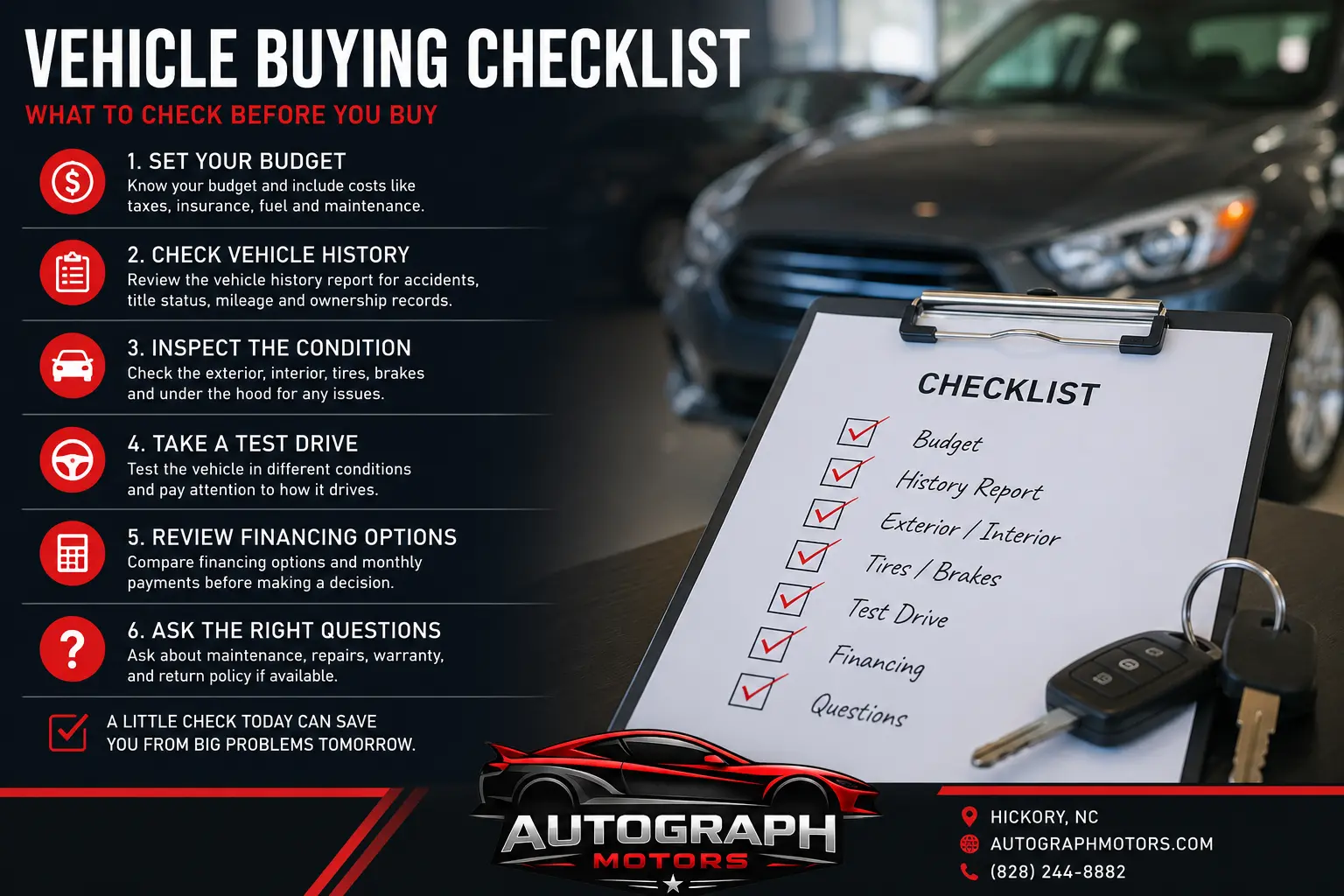
Buying a vehicle is a big decision, and the best choice should be based on more than price, photos, or monthly payment. A vehicle may look great online, but smart buyers take time to review the budget, mileage, history, condition, safety features, financing, and test drive performance before making a final decision.
At Autograph Motors, we help drivers shop with more confidence by focusing on practical details that matter during the buying process. Whether you are buying your first vehicle or replacing your current one, this checklist can help you compare options more clearly.
1. Set a Realistic Budget First
Before you start comparing vehicles, set a budget that works for your full monthly cost. Many shoppers only look at the listed price, but the true cost of owning a vehicle includes insurance, fuel, taxes, registration, maintenance, and possible future service needs.
A good vehicle should fit your budget comfortably. If the monthly payment feels too high before adding insurance and fuel, it may not be the right option. A clear budget helps you shop with less stress and avoid choosing a vehicle that becomes difficult to manage later.
2. Review the Vehicle Mileage
Mileage is one of the first things buyers notice, but it should not be the only factor. Lower mileage can be attractive, but condition and maintenance history are just as important. A well-maintained vehicle with moderate mileage may be a better long-term choice than a lower-mileage vehicle that was not properly cared for.
When checking mileage, ask yourself:
- Is the mileage reasonable for the vehicle’s age?
- Does the interior and exterior condition match the mileage?
- Does the vehicle feel smooth during the test drive?
- Are there signs of heavy wear or poor maintenance?
3. Check Vehicle History and Title Status
A vehicle history review can help you understand important background details before buying. It may show previous ownership, accident records, title information, mileage records, and other useful details. A history report does not replace a physical inspection, but it can help you ask better questions before making a decision.
Before buying, ask about title status, available history information, and whether the vehicle has been inspected. The more you know before purchasing, the more confident you can feel about your choice.
4. Inspect the Exterior Carefully
The exterior can tell you a lot about how a vehicle was treated. Walk around the vehicle slowly and look for dents, scratches, rust, paint differences, damaged lights, windshield cracks, and tire wear. Small cosmetic issues may not always be a problem, but signs of poor repair work should be reviewed carefully.
Pay attention to these exterior details:
- Body panels and paint condition
- Headlights and taillights
- Windshield and window glass
- Tires and wheels
- Rust or corrosion
- Signs of previous damage or repair
5. Review the Interior Condition
The interior is where you will spend most of your time, so comfort and condition matter. Check the seats, dashboard, air conditioning, controls, windows, locks, media system, and overall cleanliness. Interior wear can also give clues about how the vehicle was used by previous owners.
During your inspection, test important features such as:
- Air conditioning and heating
- Power windows and locks
- Seat adjustment
- Dashboard controls
- Backup camera if available
- Bluetooth or media system
- Interior lights
6. Check Tires and Brakes
Tires and brakes are important for safety and future costs. Uneven tire wear may suggest alignment or suspension issues. Brake vibration, squeaking, or weak stopping power should be checked before buying.
When reviewing tires and brakes, look for even tread, matching tire sizes, no visible sidewall damage, and smooth braking during the test drive. A vehicle should stop confidently and drive straight without strong vibration.
7. Take a Proper Test Drive
A test drive is one of the most important steps before buying. It helps you understand how the vehicle feels in real driving conditions. Do not rush this step. Pay attention to comfort, visibility, steering, braking, acceleration, shifting, and cabin noise.
During the test drive, check:
- Does the vehicle start smoothly?
- Does it accelerate without hesitation?
- Does the transmission shift smoothly?
- Does the steering feel stable?
- Do the brakes feel strong and smooth?
- Are there unusual noises?
- Is the ride comfortable for daily driving?
You can compare available options by visiting the used car inventory in Hickory NC page.
8. Look for Dashboard Warning Lights
Dashboard warning lights should never be ignored. Before buying, make sure the check engine light, airbag light, brake warning light, oil pressure light, and other warning indicators are not active. Some lights may indicate minor issues, while others can point to more serious repairs.
If a warning light appears, ask what it means and whether the issue has been diagnosed or repaired.
9. Review Safety and Convenience Features
Safety features can make a big difference in daily driving. Depending on the vehicle, available features may include a backup camera, blind spot monitoring, lane assistance, traction control, anti-lock brakes, airbags, and parking sensors.
Convenience features also matter. A comfortable seat position, clear visibility, easy-to-use controls, and working climate control can make everyday driving much better.
10. Understand Financing Before You Buy
Financing can affect your total cost, monthly payment, and buying confidence. Before agreeing to a payment, review the terms carefully. Understand the down payment, monthly payment, loan length, and total amount financed.
The goal is not only to get approved. The goal is to choose a payment that fits your full budget comfortably.
11. Ask the Right Questions
Good questions can help you make a better buying decision. A reliable dealership should be able to answer your questions clearly and help you understand the vehicle before you purchase it.
Useful questions include:
- Is the title clean?
- Has the vehicle been inspected?
- Are there any known mechanical issues?
- Is vehicle history information available?
- Can I take a test drive?
- What financing options are available?
- What documents do I need to buy?
12. Compare More Than One Vehicle
It is always smart to compare more than one vehicle before making a final decision. Comparing different options helps you understand value, features, mileage, condition, and pricing more clearly.
For local shoppers, the dedicated used cars Hickory page can also help you learn more about shopping locally and comparing available vehicles.
Helpful Vehicle Buying Resource
Before visiting a dealership, it can also help to read a simple outside guide about choosing the right vehicle for your lifestyle. Autograph Motors INC shared a helpful Blogspot article here: how to choose the right vehicle before visiting a dealership.
Final Thoughts
Buying a vehicle should not feel rushed or confusing. When you know what to check, you can compare options with more confidence and choose a vehicle that fits your lifestyle, budget, and long-term needs.
Before making your decision, review the mileage, history, title status, condition, tires, brakes, safety features, financing, and test drive performance. A careful buying process can help you avoid stress and choose a vehicle with more confidence.
Frequently Asked Questions
What is the most important thing to check before buying a vehicle?
The most important things to check include vehicle history, mileage, title status, condition, test drive performance, and financing terms.
Should I test drive a vehicle before buying?
Yes. A test drive helps you understand comfort, braking, steering, acceleration, visibility, and overall driving feel before making a decision.
Why is vehicle history important?
Vehicle history can help buyers understand previous ownership, title status, accident history, mileage records, and possible red flags.
Should I compare more than one vehicle?
Yes. Comparing more than one vehicle helps you understand pricing, condition, features, mileage, and overall value more clearly.
Where can I compare vehicles in Hickory, NC?
You can compare available vehicles by visiting the Autograph Motors inventory page and reviewing current options online.